

CHANDIGARH/JALANDHAR, August 21 ,2026 Fact Recorder
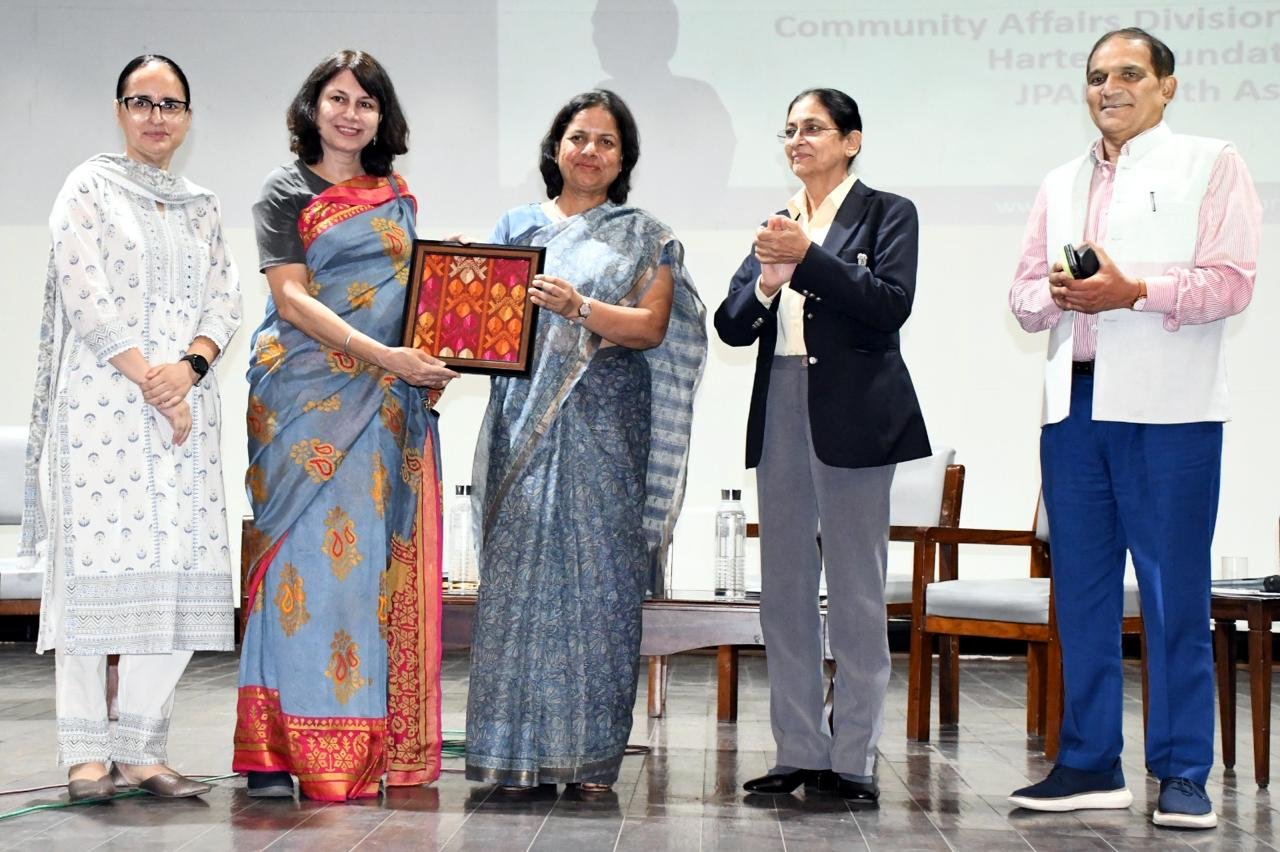
Punjab Desk: The year-long collaborative training initiative of Punjab Police, RCT research conducting NGO— Jameel Poverty Action Lab (J-PAL), and Hartek Foundation on “Gender Sensitisation and Mainstreaming of Women in Punjab Police” successfully concluded on Thursday at the historic 134-year-old Maharaja Ranjit Singh Punjab Police Academy (MRSPPA), Phillaur. The third and final day of Round-III focused on Group T1—the women-only cohort, comprising Punjab Police Mahila Mittars stationed at Women Helpdesks across the state.
Resident/National Editor (North) of The Indian Express Manraj Grewal Sharma, who graced the concluding day as the Chief Guest, while addressing the participating women officers shared how she navigated the challenges of entering what was traditionally a male-dominated field to carve out an acclaimed career in journalism.
She emphasised that reaching the top requires uncompromising dedication, stating that it is always the “extra 5% effort” that distinguishes the exceptional from the ordinary. She urged women police personnel to stand tall, claim their professional space, and actively speak out against gender-inappropriate remarks and attitudes in the workplace.
Speaking on the occasion, Special DGP Community Affairs Division (CAD) Gurpreet Kaur Deo emphasised that training interventions of this scale are vital to integrate the 11% women personnel within the 80,000-strong Punjab Police into the mainstream with dignity and equality. She exhorted women officers to realise that their self-worth stems from competence, professionalism, persistence, and confidence in their own abilities. She urged them to move past administrative desks, volunteer for challenging field assignments, and proactively demand frontline leadership roles, including postings as Station House Officers (SHOs).
The Special DGP also highlighted the Community Affairs Division’s initiatives on domestic violence, including the ‘Saanjh Rahat Kendra’ project, followed by the screening of a 15-minute documentary film on domestic violence. She noted that this evidence-based initiative reinforces Punjab Police’s commitment to building an inclusive, future-ready operational force capable of tackling 21st-century challenges—ranging from cybercrime and proxy terrorism to organized gangster networks and drug abuse.
Earlier, former DGP of Maharashtra Cadre Meeran Chadha Borwankar shared her challenges as a woman Police Officer in the early 80s when she was the only woman officer in the 1981 batch of Indian Police Service (IPS). She shared a research done by her in collaboration with Pune University on satisfaction levels of women Police Officials in Maharashtra Police and insights from the research were shared.
Former DGP of Punjab RC Singh shared his experiences in the United Nations which had adopted a policy of having 50 percent women in the United Nations. He also shared his experiences as a supportive boss when he assigned equally challenging roles to women officers working under him and provided them logistical support for fulfilling their duties.
On the occasion, Special DGP Gurpreet Kaur Deo also congratulated and felicitated the 51 Master Trainers for their pivotal role in successfully executing this cascading training model across the state.
Meanwhile, the extensive impact-assessment project trained around 1,500 police personnel drawn from 384 jurisdictional police stations across Punjab. Commencing with a Training of Trainers (ToT) course for 51 Master Trainers in December 2025, the initiative cascaded through two grassroots district-level rounds in early 2026 before culminating in the three-day academy-level Round-III. J-PAL will now undertake the final endline survey to evaluate the long-term impact on institutional attitudes and community policing practices.










,)